
As part of the international Erasmus+ CBHE SAFE LEARN project (Project ID: 101236049) and the implementation of work package 2, the first training session of the “Resilient Teaching” course was held. The session focused on developing teachers’ psychological resilience at higher education institutions.
The event was held on 26 January 2026 in an online format (Zoom) and brought together scientific and pedagogical personnel from across Ukraine interested in maintaining professional well-being and improving the quality of the educational process amid a prolonged social crisis.
The modern system of higher education operates under conditions of multi-level instability – military challenges, emotional exhaustion, constant uncertainty, an increasing professional workload, and distance-learning formats. In such a reality, the teacher’s psychological resilience becomes a key factor in preserving both personal mental health and the stability of the educational environment.
Psychological resilience is considered the ability of an individual to resist stressful influences, adapt to difficult circumstances and restore internal resources after crisis events. It encompasses cognitive, emotional and behavioural components and is formed throughout the teacher’s professional life.
The event was moderated by Tetiana SHAROVA, Doctor of Philology, Professor, Head of the Educational and Scientific Centre of the Dmytro Motornyi Tavria State Agrotechnological University.
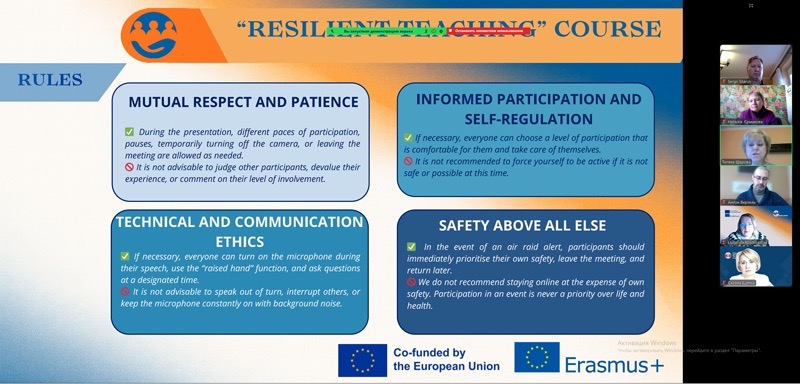
Kateryna POLUPANOVA, Project Manager and Advisor to the Dean for International Work of the Academy of Public Safety of Mykolas Romeris University (Lithuania), Head of the International Relations Department of Pryazovskyi State Technical University, addressed the participants with an introductory speech.

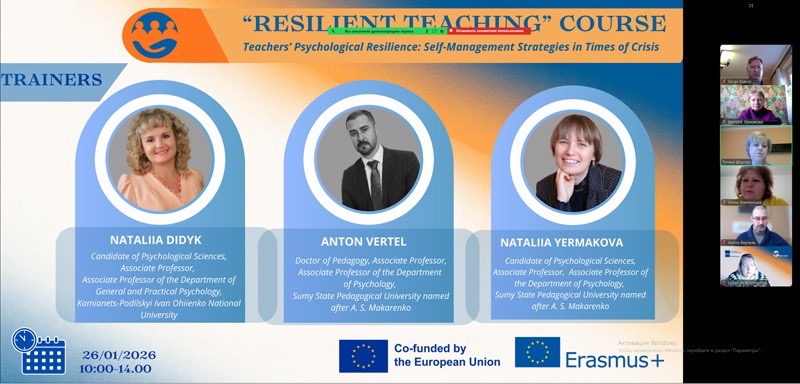
The training was conducted by leading experts in the fields of psychology and pedagogy:
- Nataliia DIDYK, Candidate of Psychological Sciences, Associate Professor, Associate Professor of the Department of General and Practical Psychology, Kamianets-Podіlskyi Ivan Ohiienko National University;
- Anton VERTEL, Doctor of Pedagogy, Associate Professor, Associate Professor of the Department of Psychology, Sumy State Pedagogical University named after A.S. Makarenko;
- Nataliia YERMAKOVA, Candidate of Psychological Sciences, Associate Professor, Associate Professor of the Department of Psychology, Sumy State Pedagogical University named after A.S. Makarenko.
1. Professional challenges for teachers during the war
The participants discussed the main risk factors faced by scientific and pedagogical workers: increased professional workload, psychological exhaustion, emotional burnout, uncertainty and loss of control, decreased student motivation to learn, and deterioration of physical health.
Special attention was paid to awareness of one’s own psycho-emotional state and timely detection of stress levels using the Perceived Stress Scale (PSS-10).
2. Stress, distress and eustress: psychological distinction
The training session presented a modern vision of the stress phenomenon:
- eustress as a positive, mobilising resource;
- distress as a factor of maladaptation and loss of work capacity;
- dysfunction as a condition requiring professional psychological or medical care.
The trainers focused in detail on the RAPID psychological first aid model, which allows for effective support in crisis situations.
3. Psychological resources of the teacher
A separate block of the training was devoted to developing the individual’s internal resources, in particular motivation, professional identity, self-esteem, emotional intelligence, and stress resistance.
Emotional intelligence was considered a key competence for teachers, encompassing awareness of their own emotions, self-regulation, empathy, and effective communication in the educational process.
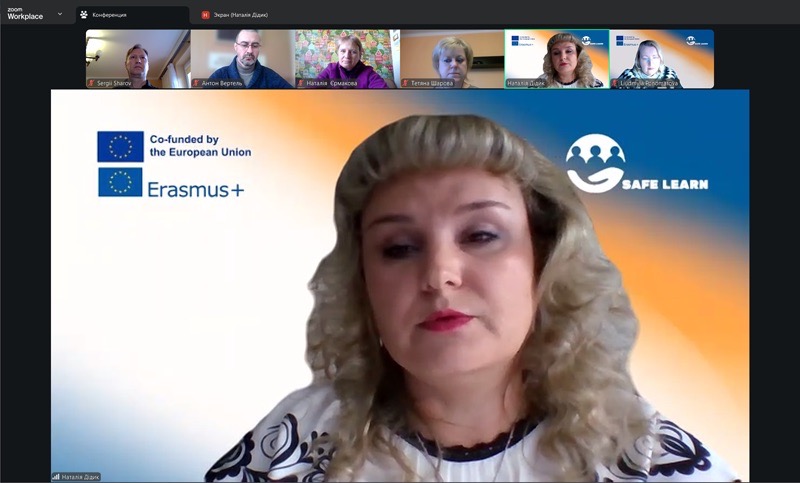
A significant part of the training session was devoted to practical work. The participants were introduced to and practised a set of self-regulation techniques:
- breathing techniques (“square breathing”, “4–7–8”, “step breathing”);
- relaxation techniques (Jacobson’s progressive muscle relaxation, “butterfly hugs”);
- physical grounding practices;
- visualisation techniques (“safe place”, “safe”);
- art therapy exercises (“mandala of protection”, “tree of strength”, “scribbles”, “mirror drawing”).
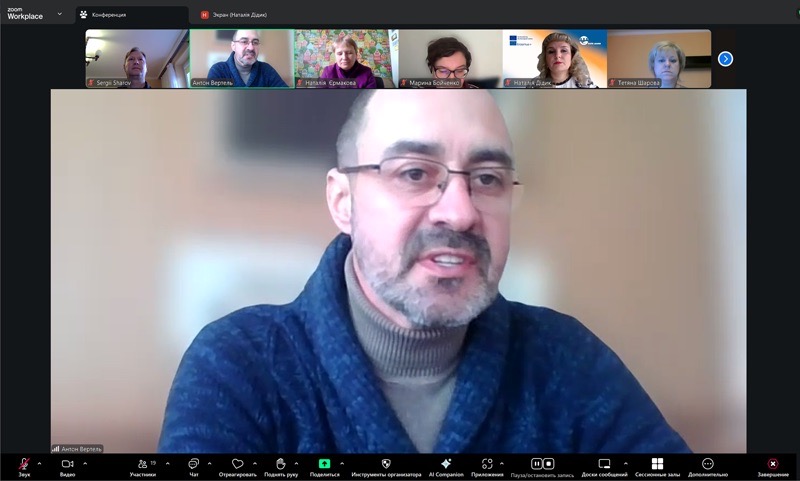
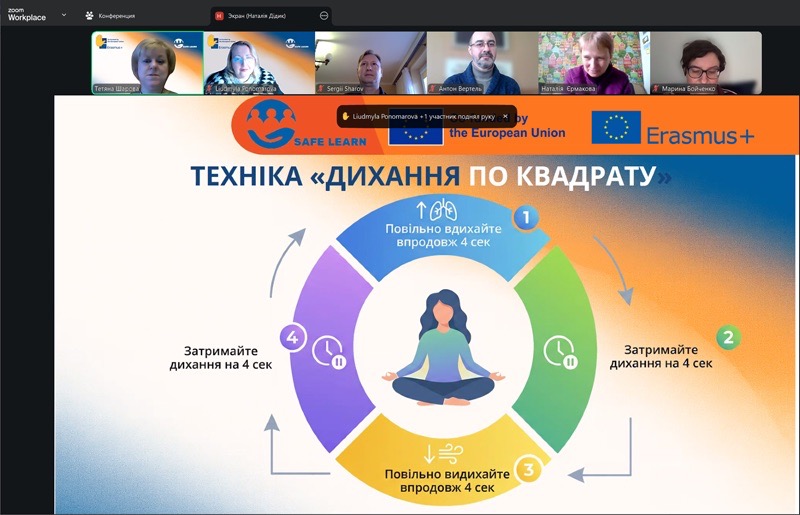
The practices were aimed at reducing tension, restoring a sense of control, returning to body awareness and forming a sense of inner security.
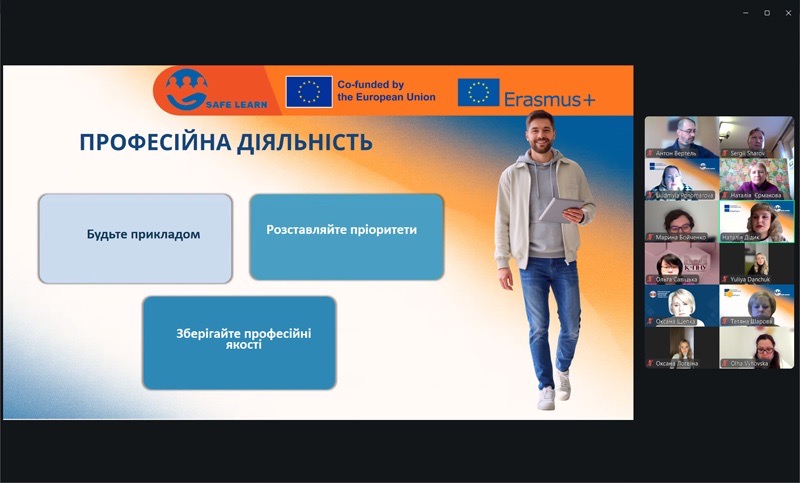
The training participants worked on realising the importance of balancing their professional and personal lives. Among the key strategies were identified:
- clear setting of priorities;
- separation of work and private time;
- regular rest;
- physical activity;
- social support;
- development of hobbies;
- practice of gratitude as a tool for maintaining meaning and inner support.
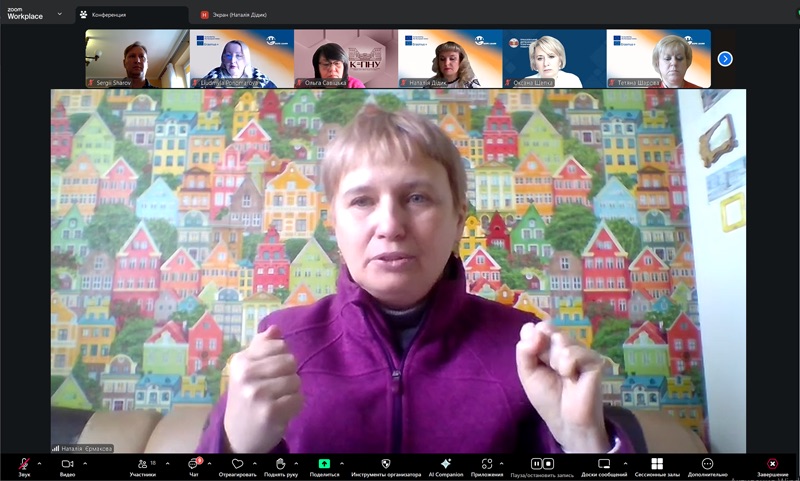
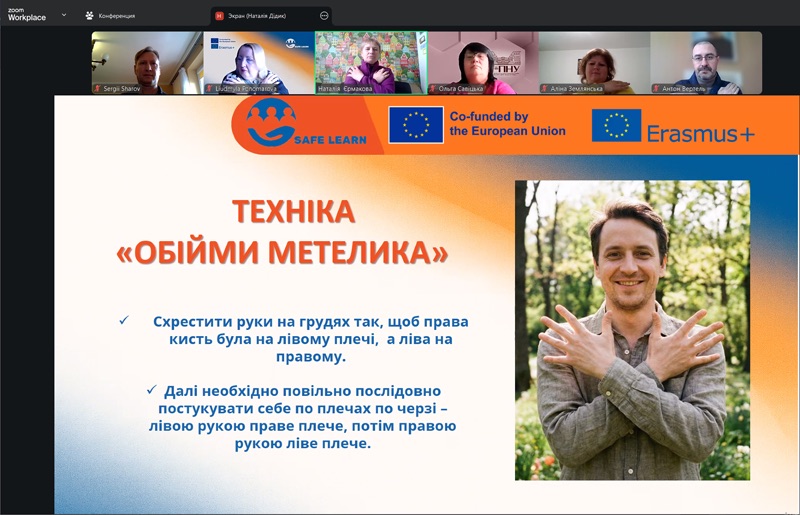
The first training session of the “Resilient Teaching” course was an important step toward achieving the goals of the SAFE LEARN project (Project ID: 101236049), which aimed to create a safe, psychologically supportive, and sustainable educational environment at higher education institutions.
The knowledge and practical skills gained allow teachers to increase their own psychological resilience, more effectively overcome stressful situations, maintain professional motivation, serve as a resource for students, and maintain the quality of the educational process even in crisis conditions.
The first training session of the “Resilient Teaching” course within the Erasmus+ CBHE SAFE LEARN project (Project ID: 101236049) highlighted the high relevance of teachers’ psychological resilience in the current crisis conditions of the higher education system in Ukraine. The training session participants received a holistic understanding of the nature of stress, the specifics of its impact on the psycho-emotional state of the individual and the professional activity of the teacher, and also realised the importance of timely recognition of manifestations of distress and emotional burnout. The combination of theoretical approaches with practical exercises contributed to a deeper understanding of their own psychological resources and the possibilities of their activation.
An important outcome of the training session was the formation of participants’ awareness of the need for self-management as a professional competence of a teacher, which includes the ability to regulate their emotional state, manage their workload, maintain a balance between professional and personal life, as well as to be responsible for their own mental health.
Practical self-regulation techniques, art therapy and body-oriented exercises mastered during the training are of an applied nature and can be integrated into teachers’ daily activities as effective tools for restoring internal balance, reducing stress levels and increasing stress tolerance. The training also contributed to the development of a culture of psychological support in the academic environment and to the formation of openness to interaction, empathy, and mutual assistance among participants in the educational process.
The results confirm the feasibility of further implementation of the “Resilient Teaching” course and of expanding psychological support practices for teachers within the SAFE LEARN project. Systematic work in this direction will improve the quality of the educational process, strengthen the professional community, and foster sustainable, responsible, and humanistic higher education.