
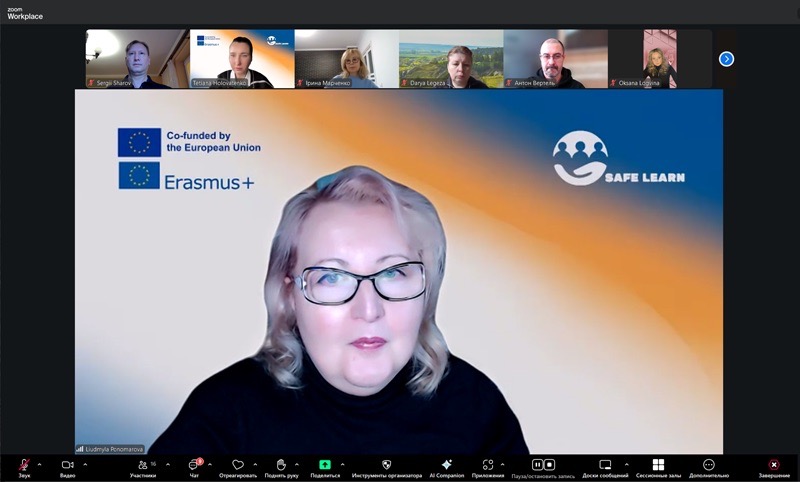
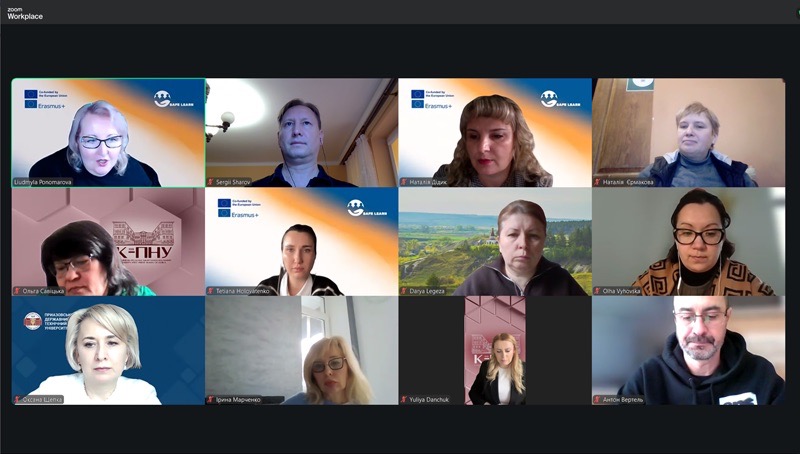
Within the international Erasmus+ CBHE SAFE LEARN (Project ID: 101236049) project and the “Resilient Teaching” training course, the second training session was delivered on 29 January 2026. The session was dedicated to the use of digital tools for organising an interactive, effective and student-centred educational process under conditions of instability and limited resources.
The training session was held online (Zoom) and brought together teachers from higher education institutions interested in rethinking digital learning as not only a technological but primarily a pedagogical and psychologically safe space.
The digital transformation of education in Ukraine today is taking place amid prolonged stress, disrupted stability, and varying levels of student access to resources. In such circumstances, the traditional transfer of educational material to an online format does not ensure its assimilation.
During the training session, it was emphasised that the challenge today lies not in the number of available digital tools, but in how—and for what purpose—they are used. Excessive information, imitation of activities, and overload with presentations and tasks can not only diminish the effectiveness of learning but also contribute to students’ psycho-emotional exhaustion.
The session was moderated by Tetiana SHAROVA, Doctor of Philology, Professor, Head of the Educational and Scientific Centre of the Dmytro Motornyi Tavria State Agrotechnological University.
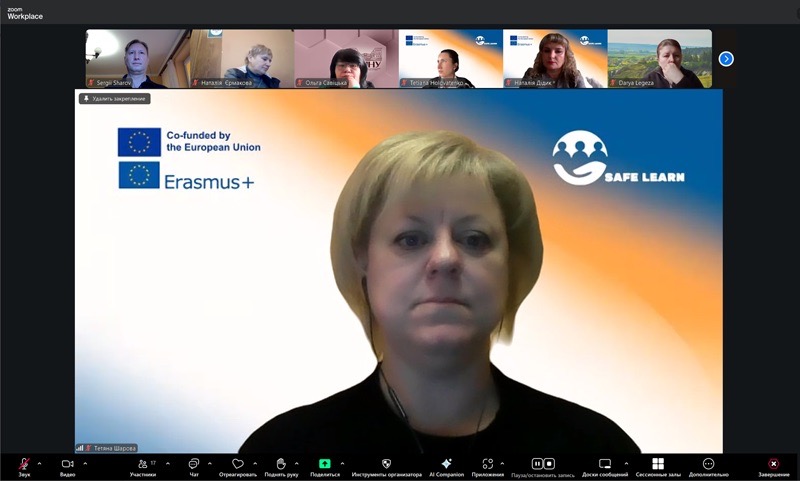
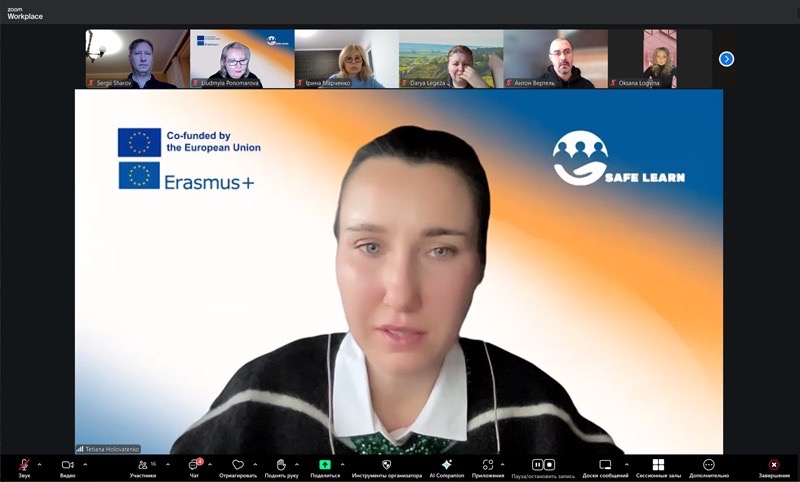
The training session was conducted by leading experts in psychology and pedagogy:
- Tetiana HOLOVATENKO, PhD (Doctor of Philosophy), Associate Professor of the Department of Innovative Pedagogy, Educational Transformations and Leadership at Teacher’s Academy of V. N. Karazin Kharkiv National University
- Liudmyla PONOMAROVA, PhD in Philology, Associate Professor, Department of Ukrainian Language and Slavic Philology, Head of the International Training School at Pryazovskyi State Technical University
The content of the training session was based on a combination of three key approaches:
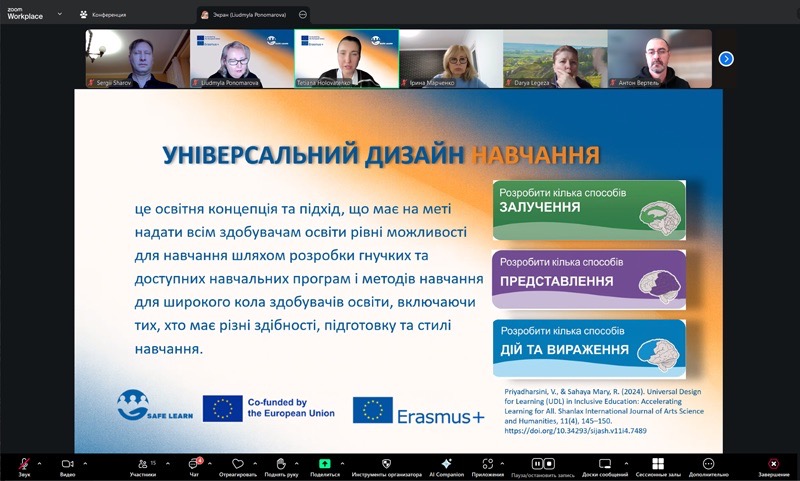
- Universal Design for Learning (UDL);
- Student-Centred Learning;
- Trauma-Sensitive Approach in Martial Law.
Participants analysed real pedagogical cases that illustrated typical problems in online classes, including low student engagement, overly formalised activities, loss of attention, difficulty maintaining group cohesion, and low learning outcomes despite significant teacher effort.
It was highlighted that effective learning cannot begin without basic conditions: a safe and accessible entry into the activity, inevitable cognitive work (thinking rather than simply clicking), and the achievement of a genuine learning product or result. These conditions should guide the choice of digital tools – rather than allowing the tools themselves to dictate the learning process.
Special attention was devoted to the neuropsychological mechanisms of learning under stress. The trainers emphasised that heightened levels of anxiety significantly impair cognitive functions related to memory, attention, and thinking. In this context, the key principle of the training session was expressed in the formula: “Safety first, learning later”.
Emotional stabilisation was considered not an additional element of the educational process but a mandatory prerequisite for access to the student’s cognitive resources. Without this, even qualitatively prepared material cannot be effectively mastered.
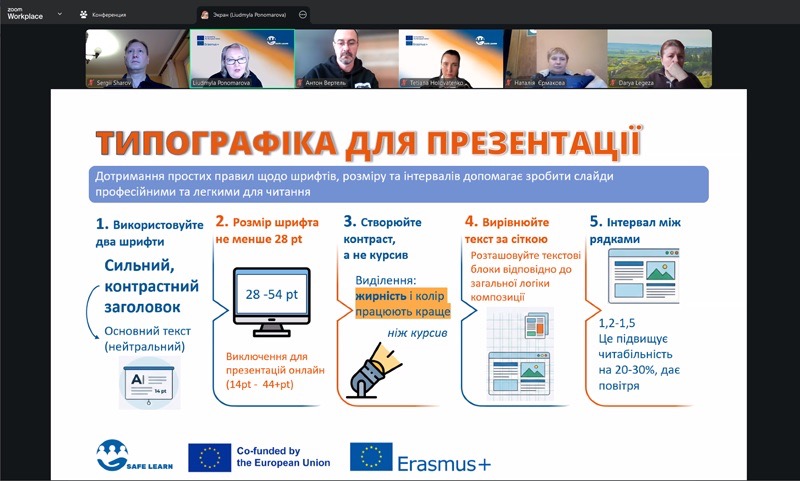
A significant part of the training session was devoted to the design of educational materials, in particular presentations and visual support for classes.
The participants were introduced to the principles of:
- “one slide – one thought”;
- logical sequence of presentation of the material;
- limiting cognitive load;
- creating a visual focus;
- using space, contrast, and typography.
It was emphasised that the learner’s brain functions as a filter: when exposed to an excess of signals, attention becomes scattered and learning activity ceases. Therefore, simplicity, structure, and visual clarity are essential conditions for effective digital learning.
In the practical part of the training session, the trainers presented digital tools that can act as “digital bridges” between the teacher and the student, in particular, tools for asynchronous learning support, services for creating visual and multimedia explanations, platforms for organising collaboration, and tools for personalising learning.
Particular attention was paid to the possibilities of reusing educational materials, adapting content for different formats (reading, viewing, listening), and supporting students in situations of limited access to electricity, the Internet, or a stable schedule.
The trainers drew attention to the significance of considering the real needs of students, in particular:
- alternative formats for presenting material;
- flexible deadlines for completing tasks;
- the possibility of asynchronous participation;
- the use of assistive devices for memorisation;
- individual pace of learning.
Such approaches comply with the principles of universal learning design and enable the creation of an inclusive, accessible, and humanistic educational environment.
The second training session of the Resilient Teaching course reinforced the understanding that digital tools are not an end in themselves but should serve as instruments to support psychological safety, student engagement, and genuine learning.
The knowledge and practical experience gained contribute to enhancing the quality of the digital educational process, reducing cognitive and emotional overload, fostering sustainable pedagogical practices, and advancing adaptive and flexible education for students affected by war.
This training session marked an important stage in the implementation of the SAFE LEARN project and laid the foundation for further development of student-centred, trauma-sensitive, and technologically appropriate learning models in higher education institutions.